Tag: Ghana

  • ‘I bring difference and uniqueness to Ghanaian music’ – Stonebwoy

    image

    He comes out as a striking young man with a dream of advancing the Ghanaian music industry, not just by doing what all others have done, but creating music that is unique and different from the wave of hip life blowing across the nation and the rest of Africa.

    When asked what he brings to the Ghanaian music scene, he replies: “Difference and uniqueness.” He believes that if he hasn’t been doing things differently from what others have done, Ghanaians would not “have pushed me or supported me to this level.”

    In response to why the mix of music—afro pop, reggae and dancehall—he said, “It is what I can connect with, personally.” He loved music so much he didn’t believe there should be a barrier to music. In as much as others would like to excel in one area, he blends the three genres of music so well that “one can have a feel of it.”

    Livingstone Etse Satekla, popularly known as Stonebwoy, recounted the creation of what has come to be known as ‘Afro Dancehall’ and ‘Afro Reggae’ music. He was one of the first to have blended reggae, afro beat and dancehall music so well that people have begun to like it. This success was also partly due to his ability to mix the local dialect with the English and Patois languages.

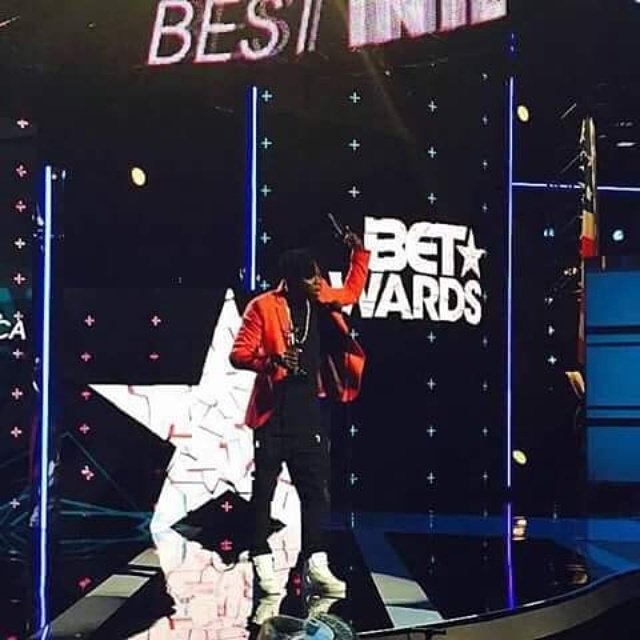
    He believed it was this uniqueness that brought him the Black Entertainment Television network (BET) award, because the organizers saw a different brand of Ghanaian music coming from the young man. He was the sole winner of the award, a departure from previous years when it was jointly awarded to different artistes. This, according to him, was due to his ability to skillfully blend the three brands of music into a completely new type that appeals to both Ghanaian and international markets.

    “Look around you now, lot of artistes now. We have Kaaki,Eye Judah, I Wan,  etc; everyone is trying to tow a certain lane that you know… this is what Stonebwoy carved—bridging the gap between the old form of reggae and the new, and making it work.”

    Stonebwoy’s story is particularly striking because of his association with one of the hectic neighbourhoods in the nation’s capital. He thinks that finding himself rising from Ashaiman is destiny, and so realizing he has talents from God, “I represent the people. I do music that can appeal to all classes of people, also being influenced by where I grew up. In all, it’s a blessing; every hard or difficult time in life I see as a blessing.”

    According to him, “where one comes from does not really matter; it depends on the person and the dream and the drive and the focus.” He indicated that what his environment did was to open him up to various classes of people—the rich, the poor and middle class— and that made him know what he wanted to become. “I believe it is a matter of blessing growing up in one of the urban cities in Ghana…like the hustle thing agoan over there.”

    Stonebwoy sees the Ghanaian music industry to be at its developing stages, and therefore thinks it needs sustained investment to mould it into a viable venture. According to him, this investment would make it promising and worth attracting many, including those who think music is not a respectable profession to pursue. He said further that Ghana is yet to take the music industry seriously, like other nations do. He believes that “once it is recognized at the highest levels, then all other things would be put into it to make it attractive.”

    Livingstone observed that in as much as he appreciates the role the likes of Quick Action, Okomfor Kwaadei, Samini, Buk Bak, Afro Moses, etc. have played in his success story, he can’t point to any particular person as his role model, because, “a lot of people impacted in my career; some didn’t even know they did.” He believed also that even though somebody may impact on one’s life, one would also have to maintain his own identity – to be himself or herself in order to bring out one’s uniqueness.

    Commenting on the love and massive support he receives from his fans, Stonebwoy asserts that “it’s amazing, and before God and man I have never seen this as a reason to want to brag; neither do I see it as a form of … like a point to feel… like… superior over them, but rather what runs through my mind is how amazing God can use a person to inspire other people.”

    In that respect he does music that pleases them and makes them happy; “even deeper music that would let them think.” That is the reason why even the current president of Ghana has said he loves some of his songs. “That alone gives me a certain level of fulfilment and makes me know I am doing the right thing.”

    Internationally, Stonebwoy wants to extend this uniqueness by saying that if there is Afro pop and Afro beat there can be Afro dancehall and Afro reggae. This is what identifies the Afro brand coming from Africa, and it is his desire to send such a message across.

    Even though he doesn’t want to take credit alone for the spread of that genre of music, he wants to say he is one of the persons who started pushing Afro dancehall “till it started making sense, because you hear the Afro beat and it’s jamming, and it’s from down town melody with Ghanaian dialect and Jamaican patois and English, so people love it and relate with it all round.” As he indicated, his songs are now playing on Jamaican radio and across the Caribbean, as well as other African countries.

    Livingstone believes that it is God who decides what the future would look for him, but he also thinks that “as long as I keep on making the people happy, keep making good music, I am gonna be one of the first to be doing the first things.” He believes he has already started doing the first things. “Like the first person from Ashaiman to win a Ghana music award; the first one to win the dancehall reggae awards, and the first Afro dancehall to win a BET. “That’s all I want from God. So anyhow he sends it, any how it ends, anyhow he pushes it, we can only give thanks and hope for the best.”

  • Stonebwoy wins Best African Dancehall Artiste Award At AFRIMMA 2015

    Stonebwoy wins Best African Dancehall Artiste Award At AFRIMMA 2015

    image

    Ghanaian dancehall artiste and BET Award winner Stonebwoy over the weekend won the Best African Dancehall Artiste at AFRIMMA 2015.

    The ‘Pull up’ hitmaker beat Shatta Wale and Nigetrian artiste Patoranking to win the award.

    AFRIMMA which took place in Dallas, Texas in the United States seeks to honour some of Africa’s top music artists and producers.

    Full list of winners below.

    Best Male West Africa – Davido

    Best Female West Africa Yemi Alade

    Best Newcomer – Kiss Daniel – Ommy Dimpoz

    Best Male East Africa – Diamond Platnumz

    Best Video Director – Godfather

    Best Male Central Africa – Yuri da Cunha

    Best Female East Africa – Vanessa Mdee

    Best African DJ USA – Dj Simple Simon

    AFRIMMA Video of The Year – ‘Nana’ by Diamond Platnumz ft Flavour

    Best Male Southern Africa – Aka

    Crossing Boundaries With Music Award – Jidenna

    Song of The Year – Ojuelegba – Wizkid

    Best Dance In A Video – Serge Beynaud – Okeninkpin

    Best Collaboration – Aka ft Burnaboy, DaL.E.S and JR – All Eyes On Me

    Artist of The Year – Diamond Platnumz

    AFRIMMA Inspirational Song – Bracket ft Diamond Platnumz – Alive *

    Transformational Leadership Award – Botswana President, Lieutenant General Seretse Khama Ian Khama

    Legendary Award – Youssou Ndour

    Best Traditional Act – Flavour

    Music Producer of The Year – Legendury Beatz

    Best Female Central Africa – Mani Bella

    Best dancehall Artist – Stonebwoy

    Best Dance In A Video – Serge Beynaud Okeninkpin

    AFRIMMA Humanitarian Artist – 2face Idibia

  • Video : STONEBWOY (@Stonebwoyb) – Run Go

    Video : STONEBWOY (@Stonebwoyb) – Run Go


    Music video for Run Go performed by STONEBWOY.

  • “I want to make a change”

    “I want to make a change”

    image

    When Entertainment Today caught up with an upcoming Dancehall artiste, Eric Addae known by his stage name as Selah Berma he indicated his intention to bring a change in the Ghanaian music industry.

    And whilst doing that the promising young musician assured his fans of good music which would blow their minds.

    Who is selah Berma?

    Selah Berma aka Adi Baritoner is a fast rising Ghanaian Dancehall ,Soca Reggae, Afro-beats, Hip-Pop artiste.

    How do you see Dancehall in Ghana?

    Dancehall in Ghana is here to stay, it’s a worldwide genre which is really making good impact in the Ghanaian music industry now  as it’s the trend everybody is banging and getting familiar with. Dancehall is really helping and pushing the local artistes to the international level which i’m proud of being part of the success.

    How many years have you been in the music industry?

    Well I started  music when I was a teenager but at the  age of 10,  I was drawing and painting as well. I discovered my talent as a musician during my  Junior High School (JHS) day and  started with hip-pop which shows how versatile and creative I’m.

    Who is your mentor and why?

    Well I have couple of mentors I look up to. Some are dead others are still  alive doing great in music. For instance, the late Reggae legend , Robert Nesta  Bob Marley, Buju Banton, Super Cat, Sean Paul, Beenie Man, Bounty Killer, Mavado, VybzKartel Capleton are among the people I  adore. And the truth of the matter is,  I love listening to their music.

    How many songs do you have in your credit so far?

    I have  about 80 songs to my credit, I have some songs which I don’t put online for free  downloads .I  have a mix -tape album of about 12 songs coming  which will hit the air waves very soon . The songs are combination of  Jamaican  rhythms and locally produced beats.

    What is Dancehall music?

    Dancehall music is different from Reggae. Dancehall simply means dancing and it is played mostly at night  clubs. Dancehall is more of DJ-ing concept, with artistes using certain rhythms like “Diwali” rhythm. Dancehall can be often derogatory, but is generally just a lot of fun. Dancehall is also a genre of Jamaicans popular music which developed in the 1970’s. Dancehall historically comes from Jamaica and it is a  reflection of social injustice, repatriation and Rastafari beliefs.

    Does dancehall music have a future?

    Dancehall is here to stay forever and ever which I enjoy doing.

    Name your favourite Dancehall artistes  in Ghana

    I really don’t have a favourite Dancehall artiste in Ghana now but I do like all those doing that type of music in the industry.

    Have you collaborated with any musician before?

    I collaborated with some South Africans in  couple of my songs from  my official album and also done collaboration  with some American hip -pop artistes .

    What’s new for selah Berma?

    It is about  my “Sugar Daddy” music video and I want to entreat all my  fans to watch out on my social media handles thus,  Facebook:selahbermadancehallbeta and Twitter&Instagram: Selahberma_adib. In fact “it is da bomb”.

    Your final word to your fans

    A new generation is coming to take over and that is the StarBornGeneration. So they should keep supporting the movement and keep spreading the message. Selah Berma will always give them the best music and videos as well as good performance when on stage. Be Entertained To Attain Real Happiness Musically And Naturally. I love you all.

  • Stonebwoy wins Best Int’l Act Africa at BET Awards

    Stonebwoy wins Best Int’l Act Africa at BET Awards


    Bet bhim


    Ghana’s Dancehall artiste, Stonebwoy has won the award for Best International Act at the 2015 BET Awards.

    He won in a category which included Sarkodie, South African cool kid A.K.A, and Nigerian beauty Yemi Alade.

    This was Stonebwoy’s first ever nomination for the international award.

    Many Ghanaians have taken to social media to congratulate him for winning the award This year marks the 15th edition of the BET awards.

    Stonebwoy was in April this year crowned the #VGMA2015 Artiste of the year.

    He beat the likes of Daddy Lumba, Sarkodie, Edem, Samini and MzVee to win the coveted award.

    Earlier some Ghanaian celebrities including John Dumelo, Majid and Yvonne Nelson were spotted there.

  • DJ Blow tipped to win Ghana’s Best Event DJ award

    DJ Blow tipped to win Ghana’s Best Event DJ award

    42664933.295Following his outstanding performance in the Ghanaian showbiz industry, DJ Blow of Starr FM has been tipped to win Ghana’s Best Event DJ Award at the much-awaited Ghana DJ Awards slated for Saturday, February 21at the Accra International Conference Centre (AICC).

    Ghana DJ Awards is being organised by Mercury Republic to reward hardworking radio and mobile DJs who have contributed immensely to the growth of the entertainment industry in Ghana.

    DJ Blow would be vying for the Best Event DJ of the Year spot with DJ Black, DJ Armani, DJ Kofi, DJ Mensah, DJ Vyrusky, Nii Aryee Tagoe, DJ Slim and DJ Am-in.

    Music lovers and analysts have tipped him to outshine his colleagues in the awards due to his prominence as one of the finest, hardworking and most widely known DJs in the country, both on radio and on stage.

    With over 20 years of impeccable radio experience, DJ Blow, known in private life as William Nanka Bruce, has over the years entertained music lovers on radio and at events across the country with his tactical selection of classical music mixes and excellent delivery.

    He has played a host of corporate events and with a list of happy clients such as Tigo Ghana, MTN, GCBL, KLM, British American Tobacco, GTP and Total; making him the most viable contender for the award.

    As Co-Director of Tag Team LTD and DJ of the world’s most celebrated monthly hangout’s Tulip Mirror Ball, he has captivated discerning patrons of the mature persuasion both on the dance floor and on radio in a manner that has never been witnessed before in this country.

    DJ Blow already blows the minds of his listeners on Starr FM with his excellent taste for ‘old skuul’ music as he brings a whole new twist and turn to Starr FM’s adult contemporary music segment.

    Growing up as a teenager in the 1980s, DJ Blow did the rounds at all hip clubs of the time; Babylon, Keteke, Cave du Roi, Black Caeser’s Palace, Stallion, Maharani, and was a regular at all the fun fairs at Christ the King School and ATTC.

    An old student of Presbyterian Boys Secondary (Presec) at Legon, Bruce has always loved music and has been a keen collector of records, and lately CDs, which explains his huge repertoire of varied sound.

    It would be recalled that DJ Blow, for over a decade, took many old school music enthusiasts on a musical journey back to the 80s through to the 90s after a hectic week and on tiresome Saturday and Sunday afternoons.